A useful food reserve starts with a simple question: what could your household eat if refrigeration were unavailable?
The answer involves more than buying extra rice or putting ingredients into sealed containers. You need suitable foods, appropriate packaging, a sensible storage location and meals your family will actually use.
Practical Food Storage helps you bring these pieces together. Explore long-lasting pantry foods, compare preservation methods and build a manageable reserve without depending entirely on your refrigerator or freezer.
Affiliate disclosure: This website contains affiliate links. If you purchase through these links, we may earn a commission at no additional cost to you.
Interested in traditional food-storage ideas? Explore The Lost Superfoods book for its collection of historical foods and preservation topics. Check any method you plan to use against current, research-based food-safety guidance.
Start Here: Build a Food Reserve You Understand
You do not need to purchase a year’s supply of food at once. Begin with a small selection of familiar ingredients and a clear plan for storing and using them.
Our beginner’s guide to long-term food storage walks through choosing a goal, assessing your space, selecting foods and keeping track of what you store.
If avoiding refrigeration is your main concern, start with storing food without refrigeration. It explains the difference between foods designed for pantry storage and foods that still require temperature control.
For a food-first approach, explore foods that can last for years. Use the guide to compare suitable options alongside their packaging requirements and storage limitations.
Choose Foods That Fit Your Household
The longest advertised shelf life is only one consideration when choosing food. A useful reserve should also fit your meals, available space, preparation equipment and budget.
Before buying in bulk, ask:
- Does my household normally eat this food?
- Can I prepare it with the water and cooking equipment available?
- Will I use an opened package before it deteriorates?
- Can I store it under the conditions its label or preservation instructions require?
- Does it help me make complete meals?
Our guide to the best foods for long-term storage helps you compare pantry staples rather than collecting unrelated items.
Dry staples
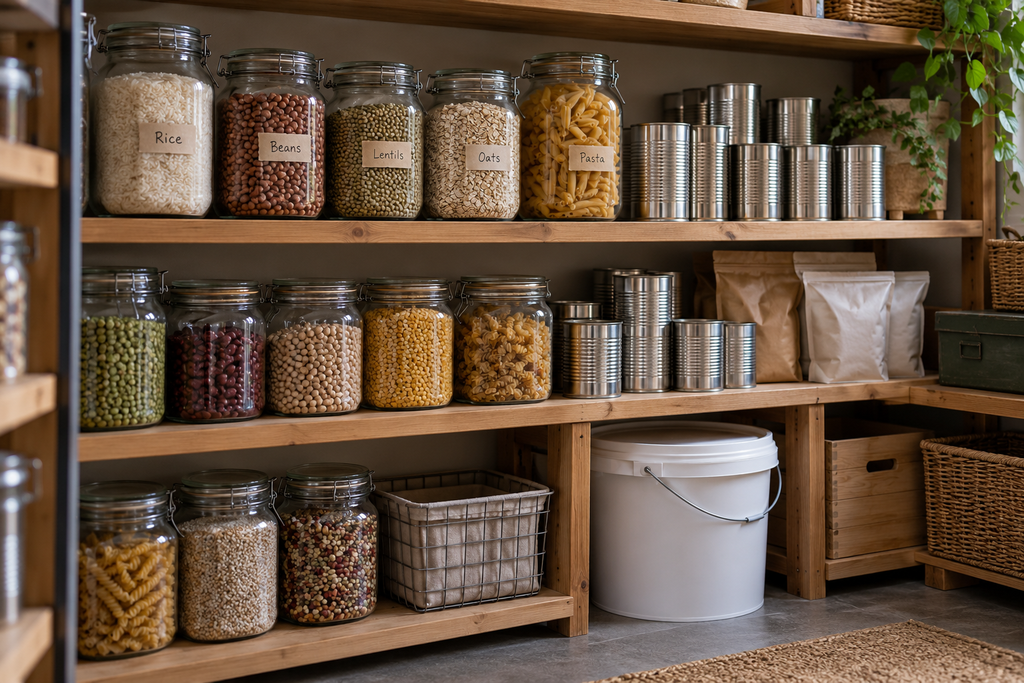
Rice, dried beans, lentils, oats and pasta can form the basis of many pantry meals. Their practical value depends on how you package them, how you store them and what you need to prepare them.
Start with our guides to storing rice long term and storing dried beans and lentils.
Ready-to-use pantry foods
A reserve made entirely from ingredients requiring lengthy preparation can be inconvenient when water, time or cooking fuel is limited.
Include suitable ready-to-eat options alongside cooking staples. Our shelf-stable protein guide compares options that can contribute variety to a pantry.
Foods that need faster rotation
A practical pantry can include ingredients with shorter storage lives. The key is to buy manageable quantities and use them regularly.
Our guide to storing cooking oils, nuts and peanut butter explains why fats deserve a different purchasing and rotation plan from many dry staples.
Match Your Packaging to the Food
A container’s appearance does not tell you everything about its suitability for long-term storage.
Daily-use pantry containers and packaging intended for a longer reserve serve different purposes. Consider food-contact suitability, protection from moisture, seal quality and how often you will open the package.
Our food storage container guide compares the main options and helps you choose packaging for a specific job.
For more focused guidance, explore:
- Mylar bags for food storage — food suitability, sealing and protective storage.
- Oxygen absorbers for food storage — appropriate uses and important limitations.
- Food-grade storage buckets — liners, lids, access and handling.
Packaging is one part of the process. It should support an appropriate storage method, rather than serve as a reason to ignore a food’s requirements.
Want to explore the traditional-food side of pantry planning? See what The Lost Superfoods includes. Treat its ideas as subjects to investigate, and use authoritative instructions whenever preservation safety is involved.
Make Your Storage Location Work for You
Where you keep food matters alongside what you buy.
Utah State University Extension identifies moisture and temperature as critical storage factors. It also explains that sunlight can accelerate deterioration. A shelf-life claim should therefore be considered together with the conditions under which the food is stored.
Our food storage conditions guide helps you assess possible locations in your home.
Start by checking:
- Whether the space becomes hot during the day or in summer.
- Whether dampness, leaks or condensation affect the area.
- Whether food sits in direct sunlight.
- Whether you can inspect packages and reach older supplies easily.
- Whether cleaning products and other chemicals are stored separately.
If your home stays warm for much of the year, read our guide to food storage in hot climates before relying on shelf-life figures based on cooler conditions.
Learn Preservation One Method at a Time
Buying shelf-stable foods and preserving food at home are different starting points. You can build a useful pantry with commercially prepared products before deciding whether home preservation suits you.
When you are ready to learn a method, consider the equipment, time, ingredients and instructions it requires.
Our food preservation methods guide compares the main approaches. The home food preservation beginner’s guide helps you choose a manageable first project.
For home canning, use research-tested recipes and the equipment specified for the process. The National Center for Home Food Preservation provides food-specific guidance.
Historical practices can be interesting to study, but their age alone does not establish that a particular recipe is safe for modern home storage.
Plan Meals Before Expanding Your Stockpile
A collection of ingredients becomes more useful when you know how to turn it into meals.
Choose a few breakfasts, lunches and dinners that your household already enjoys. List the shelf-stable ingredients, check the preparation requirements and try the meals before buying larger quantities.
Our shelf-stable meal guide helps you connect pantry foods with everyday cooking.
For broader planning, use the emergency food storage plan. It brings food selection together with household needs, water, cooking arrangements and available space.
A realistic plan should make it easy to answer:
What will we eat, how will we prepare it and how will we replace what we use?
Keep Your Pantry Affordable and Organized
A food reserve should fit your finances and your normal shopping routine.
Start with a few additional items you already use. Expand gradually, compare useful quantities and avoid buying large packages solely because the price per kilogram looks attractive.
Our food storage on a budget guide helps you build a reserve in stages.
Then use a pantry inventory and rotation system to record what you have, where it is stored and what needs attention next.
An organized pantry helps you notice missing ingredients, avoid duplicate purchases and bring stored foods into your regular meals.
Explore The Lost Superfoods
The Lost Superfoods is a book marketed around traditional foods, historical recipes and storage without refrigeration.
It may interest readers who enjoy exploring older food practices alongside their pantry planning. Before purchasing, consider what you want from a book: historical ideas, meal inspiration, storage organization or technically validated preservation instructions.
Our The Lost Superfoods review is the place to examine the book’s advertised contents, intended audience and limitations.
Any unusually long shelf-life claim deserves a closer look at the food, preparation method, packaging and storage conditions involved.
If this approach interests you, visit the official The Lost Superfoods offer to check the current contents, format, price and purchase terms.
Take Your First Practical Step
Choose one shelf or cupboard. List a few meals your household enjoys, identify their suitable pantry ingredients and decide how you will store and rotate them.
You can expand the reserve after you understand how it fits into your home and routine.
Begin with the complete guide to long-term food storage and build from there.